Fluorescent penetrant inspection
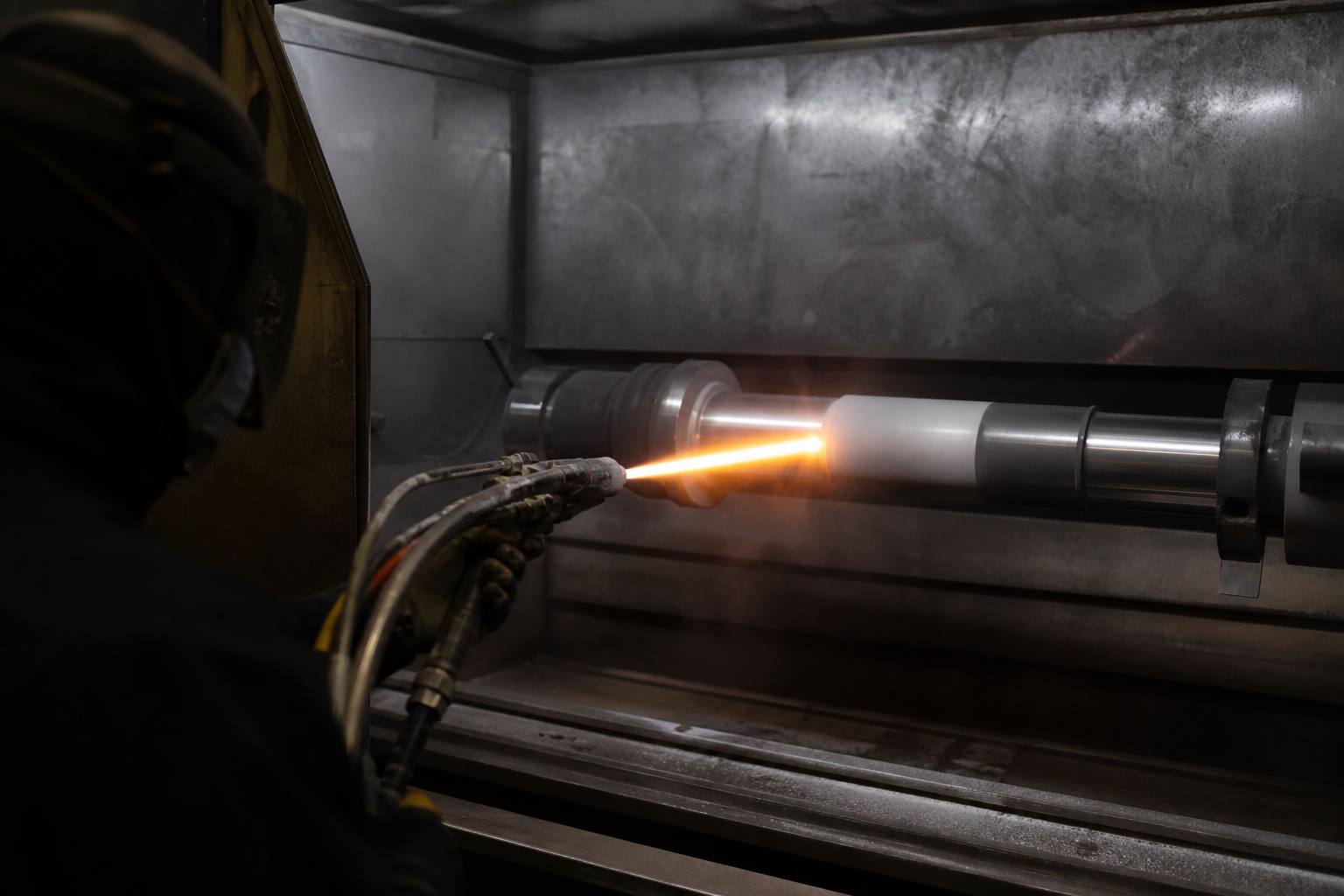
Fluorescent penetrant inspection is how cracks and open porosity show up before a coated part goes back into an aircraft, a turbine, or a press that cannot afford a surprise. The URL still says “flourescent” because that is how the old site spelled the folder; the booth uses the standard method, not the extra “u.”
Level II inspectors named on Our Company run the process to a written practice: clean, penetrate, dwell, remove, develop, inspect under UV, record. Aerospace hardware lives or dies on that record. Power parts and some mill shafts get the same look when the specification is not a handshake. The quality cage on Quality owns the procedure number; the booth owns the execution.
Penetrant does not replace a bond test or a grind log. It finds openings that connect to the surface. A closed pore in a plasma layer may stay hidden; that is physics, not a scandal. Knowing what the method can see is part of quoting. After cladding, FPI is often the difference between a bead that looks fine in white light and a crater that will grow in service.
Shot-peened surfaces and rough as-sprayed lands can hold penetrant in innocent texture. Procedures say when to inspect relative to grind and peening. Doing FPI in the wrong order wastes chemistry and confidence. Masking from spray must be gone; leftover tape under UV is a joke nobody wants in the file.
If you reached this page from the home page menu, you probably already have a spec paragraph. Send the spec and the alloy so the quote includes dwell times and reject criteria, not a vague “NDT extra.” Related reading: process overview.
What FPI will not do
Penetrant will not prove bond. It will not measure thickness. It will not forgive leftover maskant that fluoresces like a joke. It will find surface-connected openings if the procedure is followed, including dwell and UV intensity that are written down. Tell us whether inspection is before or after grind and peen; the order changes what texture holds dye. Aerospace lots bring reject criteria; mill shafts sometimes bring a handshake that we will still write into a number. If you only need a visual on a clad bead, say that, and do not pay for a method you do not want. The extra “u” in the URL is history; the booth is not.