Wire combustion spray
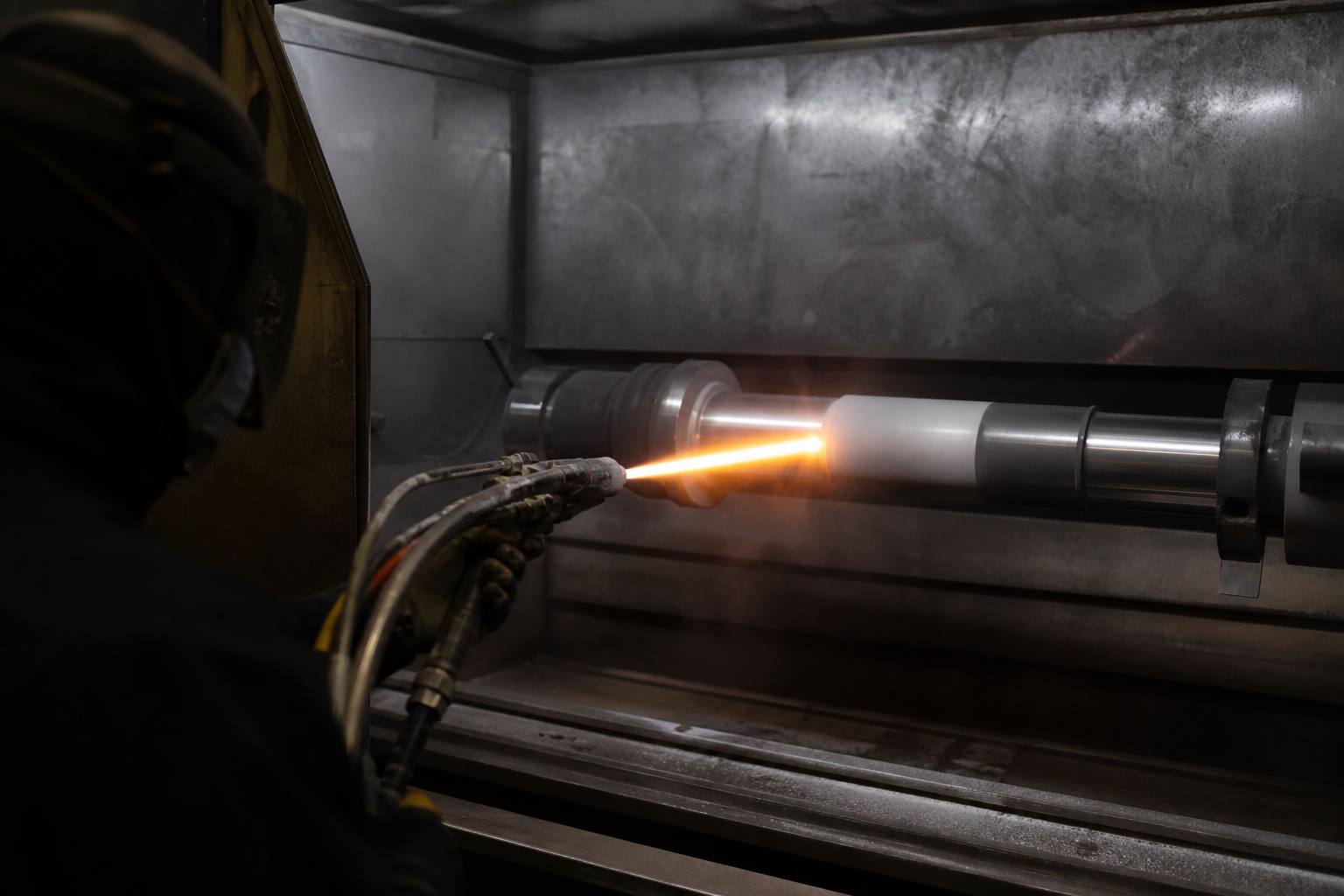
A fuel-oxygen flame melts a wire and compressed air or gas carries the droplets. Combustion wire spray is older than most of the carbide catalogs, and it still earns a bay when the job is a corrosion barrier or a modest steel rebuild rather than a superalloy thesis.
Zinc and aluminum on tanks, ducts, and structures are the classic use. Selected steels rebuild OD lands that will be machined. Glass-line hardware sometimes wants a specific combustion overlay before a ceramic — the conversation sits with glass manufacturing. The process is portable in spirit even when the part is locked in a lathe in St. Louis; the physics do not change.
Density and oxide content differ from HVOF and from arc. Anyone quoting combustion wire as “just like HVOF, cheaper” is selling a story. What it does honestly is cover area and put a sacrificial or rebuild layer on without a plasma-power bill. Sealers, thickness checks, and a grind plan still belong on the traveler under quality rules.
Surface prep is not optional. Oil under a zinc layer is a field failure with a delayed fuse. Blast profile, preheat, and pass overlap are written because operators rotate and memory is not a procedure. If an old coating must leave first, waterjet is kinder to thin shells than a wheel.
From the process family page this looks humble. Humble processes keep paper machines and chemical sheds running. If you came from the home page expecting only carbides, stay long enough to ask whether the failure is wear or rust. Rust often wants this gun. Wear often wants another. Send environment and remaining wall so the quote is not a coin flip. Related shop culture is on Our Company.
Combustion wire in real weather
Zinc and aluminum jobs fail from oil and from thickness that was never measured. Write the environment: indoor condensate, outdoor salt, chemical splash. If the shell is thin, say remaining wall before anyone talks about blast. Combustion wire is not a stealth HVOF. It is a barrier or a modest rebuild, and the grind plan should admit that. Field-portable stories do not cancel masking of threads in this building. If glass handling hardware is involved, name stick versus corrosion so the powder or wire is not a coin flip left to the operator on night shift.