Plasma spray
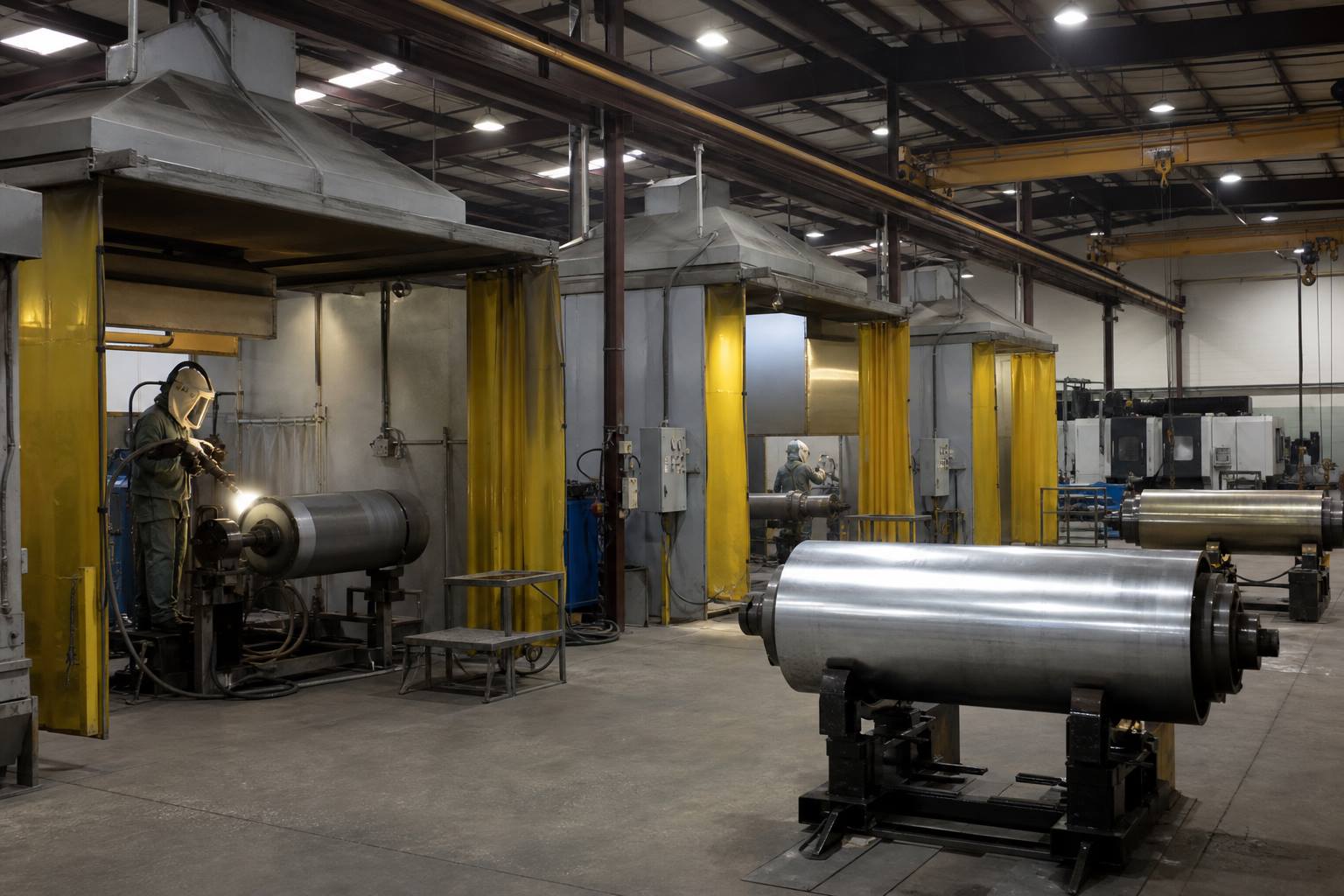
Plasma spray is the high-temperature workhorse for ceramics and alloys that laugh at a combustion flame. The arc in the torch makes a gas hot enough to melt feedstock that HVOF would rather not argue with.
St. Louis Metallizing uses plasma when a roll, plunger, or housing needs a thermal, dielectric, or chemical barrier rather than a carbide skate. Glass-plant tooling on glass manufacturing and the older legacy glass page live here for a reason: molten glass and heat checking are not HVOF conversations. Aerospace hardware that calls out a specific ceramic on a process spec also lands in this booth, then walks to penetrant and the quality cage.
Plasma coatings can be more porous than a good HVOF carbide. Sometimes that porosity is sealed; sometimes it is left because the duty wants a certain texture. Pretending every plasma layer is “fully dense” is how parts fail in steam. The traveler says what was sprayed, what was sealed, and what Ra the grind bay owes. Diamond grinding still shows up when the ceramic is hard enough to laugh at conventional abrasives.
Compared with laser cladding, plasma stays a mechanical bond. If the edge will see impact or a wash that peels splats, cladding or PTA is the grown-up choice. Compared with wire arc, plasma is slower by the pound and more particular about standoff. That is acceptable when the material itself cannot be wired.
Operators watch standoff, surface speed, and interpass temperature because a pretty first pass means nothing if the second pass oxidizes the first. Fixtures for OD rolls and awkward ID ports are built so the torch does not write a sine wave of thickness. If you arrived from the home page looking for “the ceramic gun,” this is it. Send duty temperature and chemistry with the print via contact; a powder code without a temperature is a guess, and this shop would rather quote a test coupon than a mystery.
What to send with a plasma job
Write the duty temperature and the chemical family on the request, even if you only know “hot and dirty.” A ceramic that survives a paper dryer can glaze and crack on a glass plunger. If a sealer is allowed, say so; if the land must stay porous for a reason, say that too. Standoff photographs from a previous vendor help only when they include a scale. The grind bay will still ask what landed in the booth before a diamond wheel is mounted, because color is a liar. Coupon spray is cheaper than a surprise on a production roll that already has a ship date inked on the crate.