HVOF
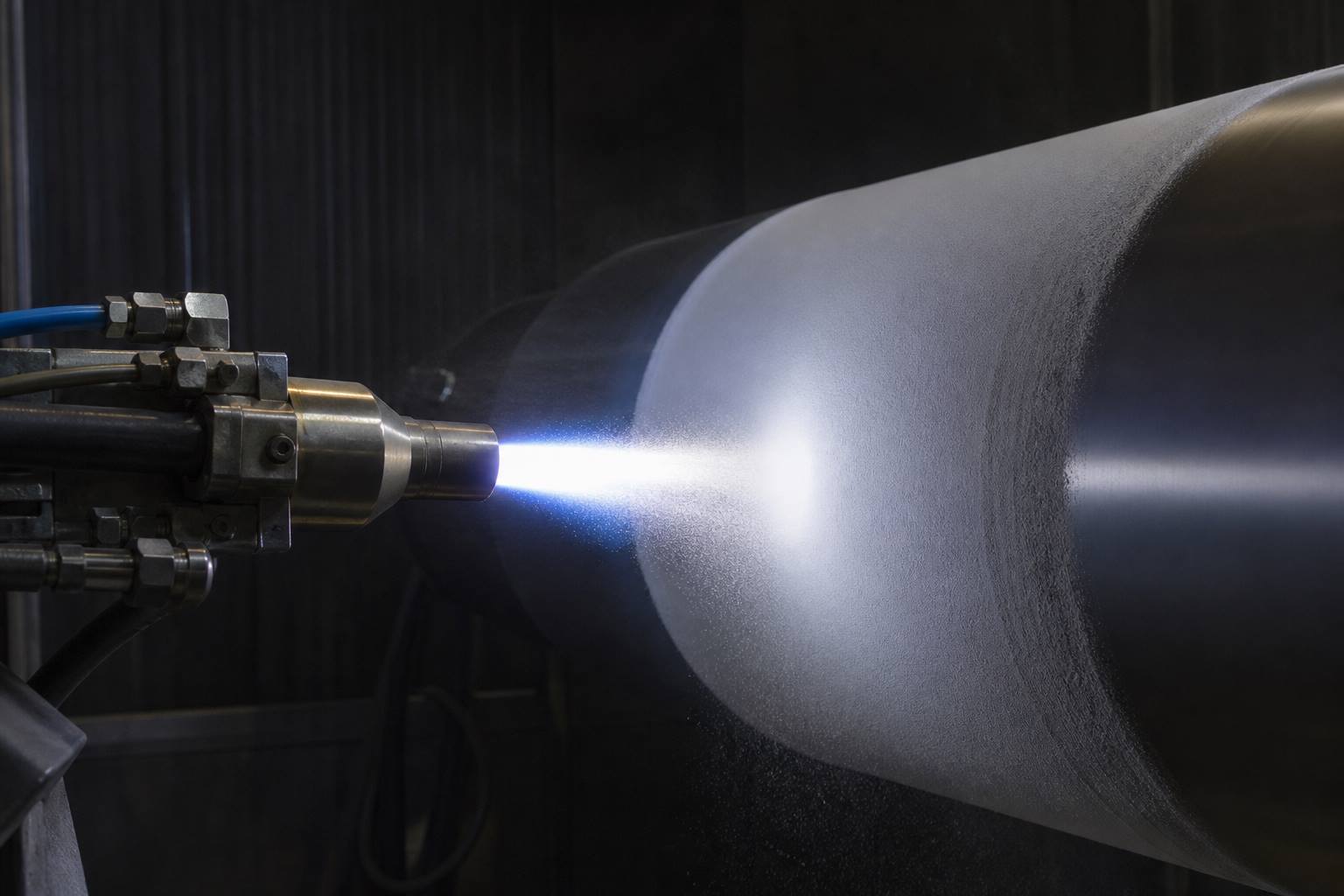
High Velocity Oxygen Fuel is the gun this shop reaches for when a journal, rod, or sleeve has to stay hard and dense under sliding wear, not just look coated in the crate.
Fuel and oxygen feed a chamber; the jet leaves so fast that carbide and alloy particles flatten into a coating with less of the sponge you get from slower flame work. That density is why hydraulic rods and pump sleeves last when the mating packing is unforgiving. It is also why grinders here live on diamond, not on a wheel that glazed yesterday — see diamond grinding of carbide and, when the print calls for a seal finish, super finishing.
HVOF is a poor match for a deep pit you hoped to fill like weld metal, and it is the wrong conversation for a ceramic thermal barrier. Those jobs go to plasma or to cladding. What HVOF does well is a thin-to-moderate land on an outside diameter that will be ground to a number, or an inside diameter where the gun can still see the wall. Power-plant fans, mill rolls, and heavy equipment pins show up with that pattern every week.
Powder choice is not a catalog flip. Tungsten carbide with a cobalt or nickel binder, chromium carbide for hotter gas paths, and selected alloys for corrosion-plus-wear are the usual suspects. The traveler lists lot numbers because ISO 9001 and FAA work do not allow “whatever was on the hopper.” Bond coats, if used, are written down the same way.
Customers who only remember chrome sometimes ask why HVOF costs more on a small rod. The honest answer is gas, powder, fixturing, and a grind that cannot be faked. The honest comparison is hours of downtime after a cheap layer lets go. If the part is a new OEM component, the same gun runs to a thickness window instead of a “cover the rust” instinct. Start from the home page if you need the shop in one paragraph, or send the print if you already know the wear land.
Strip of an old HVOF land is a waterjet job more often than a grind-off that nicks the fillet. That sequence — strip, blast, spray, grind, inspect — is how a turbine auxiliary shaft comes back looking boring, which is the goal.