Outside diameter coatings
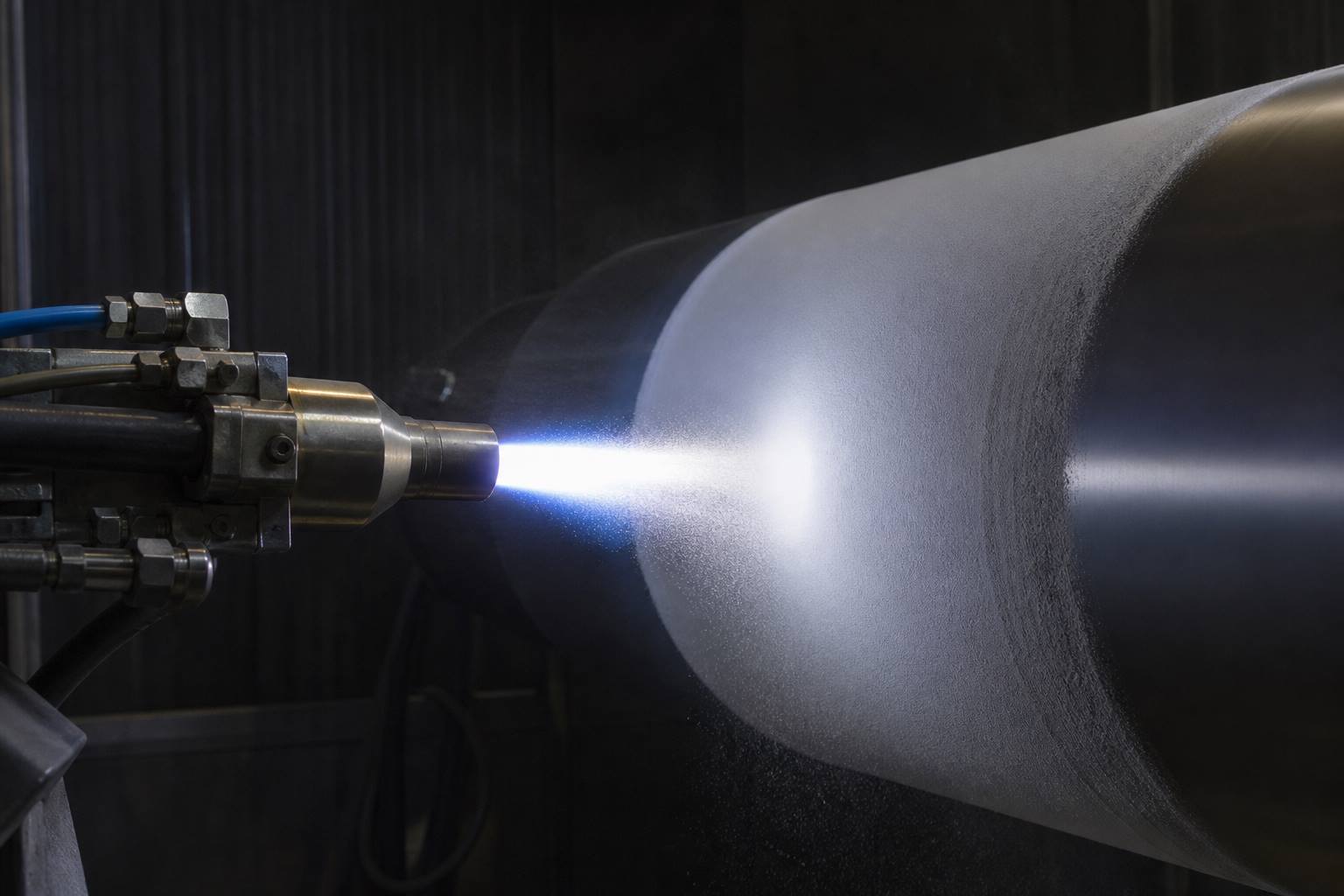
Most of the metal that leaves this building is an outside diameter: a roll, a shaft, a journal, a sleeve. The part turns, the gun tracks, and the coating becomes grind stock for a number on a print.
That sounds simple until the roll is ten feet long and the wear is a banana. Fixtures, steady rests, and a spray pattern that does not write a helix are the job. HVOF, plasma, arc, or cladding on an edge — the OD cell hosts all of them. Then taper grind or straight grind, sometimes diamond, sometimes super finish. Printing plants live here; so do millwrights with machine pins.
Concentricity to an uncoated bearing seat is a common argument. The traveler says what may be touched and what is sacred. Balance after metal is added or removed is documented when the spec is not a rumor. That paperwork habit is the same one on Quality and Our Company.
ID work is a cousin, not a copy — see inside diameter. People who only send OD journals still need to say whether the failure is packing wear, corrosion, or a crack. Cracks change the conversation toward NDT and sometimes away from spray. Penetrant is not an insult; it is how you keep a cracked shaft off a truck.
The home page summary is this cell in one paragraph. Send length, diameters, and where it runs in the machine. A photo with a scale in the frame beats a paragraph about “worn a little.” Process family: thermal spray.
Long parts lie
A ten-foot roll with banana wear needs more than a gun at mid-span. Tell us bearing seats that must stay virgin. Tell us if the part must be balanced after metal moves. A helix in the spray pattern becomes a helix in the grind if nobody watches overlap. Printing, millwright pins, and turbine journals share this cell and split on finish. Cracks change the job into NDT before powder. If you only measured one diameter, measure three. Concentricity to an uncoated register is a sentence on the traveler, not a hope. Crates should protect the land; a chain across a carbide journal is how a good coating dies at the dock.